Digital Railway Market Size: Shaping the Future of Intelligent Rail Networks
- dmr01337
- 2 days ago
- 5 min read

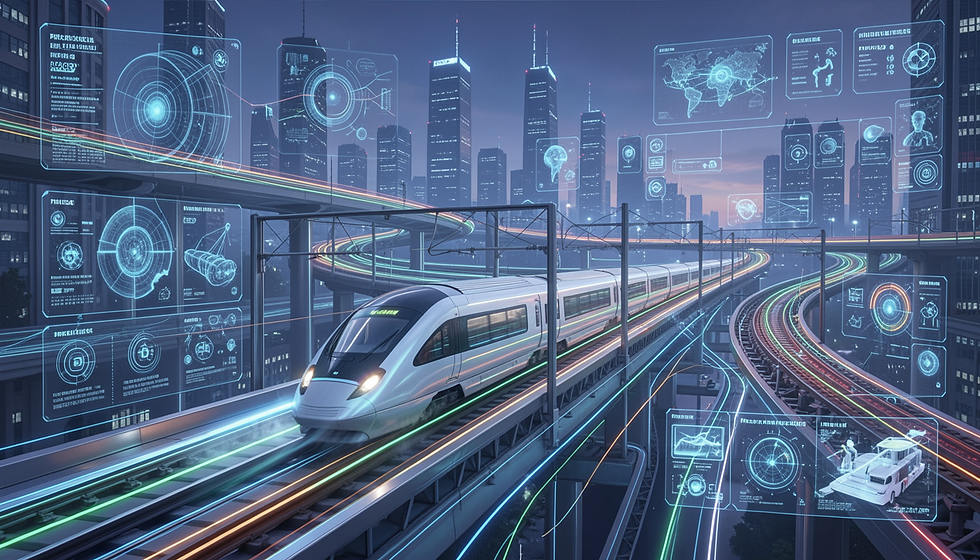
According to Dimension Market Research, The Global Digital Railway Market is undergoing a major transformation as railway systems worldwide shift toward intelligent, automated, and highly connected operations. Increasing demand for efficient transportation, improved safety, and sustainable infrastructure is driving the adoption of advanced digital technologies across rail networks. Solutions such as artificial intelligence, IoT sensors, cloud-based platforms, and smart control systems are redefining how railways operate in the modern era.
Railway infrastructure is evolving from traditional mechanical systems into fully integrated digital ecosystems. Every component, including signaling, train operations, and passenger services, is now connected through real-time data networks. This interconnected structure allows operators to make faster, data-driven decisions, improving efficiency, reducing delays, and enhancing overall system reliability.
The growing pressure of urbanization and rising passenger volumes has made digital transformation essential for railway networks. Modern rail systems must handle increasing demand while maintaining safety and punctuality. Digital railway solutions address these challenges through automation, predictive analytics, and intelligent monitoring systems that ensure smooth and efficient operations.
The expansion of smart cities has further accelerated this shift. Railways are now integrated into broader urban mobility ecosystems where transportation modes are interconnected. This enables seamless movement of passengers across multiple systems while improving overall city infrastructure efficiency.
Download a Complimentary PDF Sample Report: https://dimensionmarketresearch.com/request-sample/digital-railway-market/
Market Overview and Industry Evolution
The railway sector is witnessing a significant shift from conventional operations to advanced digital frameworks. Manual processes are being replaced with automated systems that enhance accuracy, efficiency, and safety.
A key development in this transformation is predictive maintenance. By using real-time sensor data, railway operators can detect potential issues before they become critical failures. This reduces downtime, improves asset life, and lowers maintenance costs.
Another important evolution is intelligent traffic management. Digital systems optimize train schedules, manage congestion, and ensure smooth rail traffic flow even in high-density networks. These technologies rely heavily on real-time data analytics to improve operational efficiency.
Passenger services have also been significantly improved through digitalization. Features such as automated ticketing systems, live journey updates, and personalized travel information have enhanced convenience and overall travel experience.
Key Drivers of Market Expansion
Several strong factors are driving the growth of the Digital Railway Market globally.
Government investment in railway modernization is one of the primary drivers. Many countries are upgrading aging rail infrastructure with advanced digital systems to improve efficiency, safety, and sustainability.
The adoption of IoT technology is another major growth factor. IoT devices installed on trains and tracks continuously collect operational data, enabling real-time monitoring and predictive insights.
Artificial intelligence and machine learning are further enhancing railway operations. These technologies optimize scheduling, predict demand patterns, and improve energy efficiency across rail systems.
The development of high-speed rail networks is also contributing to market growth. High-speed systems require advanced monitoring, automation, and control technologies to ensure safe and efficient operations.
Sustainability goals are pushing railway operators to adopt energy-efficient solutions that reduce carbon emissions and optimize resource usage, further supporting digital transformation.
Technological Advancements Driving the Market
Modern railway systems are increasingly powered by advanced technologies that improve connectivity, efficiency, and safety.
Cloud computing plays a central role by enabling centralized data storage and real-time monitoring across large railway networks. This allows operators to manage systems more effectively.
Big data analytics helps in processing large volumes of operational and passenger data to improve scheduling, reduce delays, and enhance decision-making.
Digital twin technology is revolutionizing railway planning by creating virtual models of physical infrastructure. These models allow operators to simulate performance and detect potential issues in advance.
5G connectivity is enhancing communication between trains, control centers, and infrastructure systems, ensuring real-time responsiveness and improved operational safety.
Automated signaling systems and AI-based train control solutions are reducing human intervention while increasing precision and reliability in railway operations.
Market Segmentation Overview
The Digital Railway Market is segmented based on component, application, and end-user categories.
By Component
The market includes hardware systems such as sensors and communication devices, software platforms for analytics and control, and services such as integration and maintenance.
By Application
Applications include passenger transportation, freight logistics, infrastructure monitoring, and railway operations management. Passenger transport remains the leading segment due to growing demand for efficient mobility.
By End User
Key end users include government railway authorities, private operators, and logistics companies. Government bodies dominate due to large-scale infrastructure investments.
Purchase Report Access
Purchase the report for comprehensive details: https://dimensionmarketresearch.com/checkout/digital-railway-market/
Regional Analysis
Europe: Leading the Global Market
Europe is expected to lead the Digital Railway Market with a 36.5% share by 2026. Strong regulatory support, advanced rail infrastructure, and sustainability-focused policies are key factors behind this dominance.
A major contributor is the adoption of the European Rail Traffic Management System (ERTMS), which standardizes railway communication and signaling across countries. This enhances interoperability and ensures safer cross-border rail operations.
Europe also benefits from its extensive high-speed rail network across countries like France, Germany, Spain, and Italy, where digital systems play a crucial role in operations and efficiency.
Environmental sustainability initiatives further strengthen Europe’s leadership, as rail transport is considered one of the most eco-friendly transportation modes.
North America Outlook
North America is steadily adopting digital railway technologies, particularly in freight and passenger rail modernization. The United States is investing in AI-based logistics, predictive maintenance, and smart signaling systems.
Canada is also enhancing its rail infrastructure with digital solutions to improve safety and operational capacity.
Asia-Pacific Growth Outlook
Asia-Pacific is emerging as the fastest-growing region in the Digital Railway Market. Rapid urbanization, population growth, and smart city development are driving large-scale railway modernization projects.
Countries such as China, India, and Japan are investing heavily in high-speed rail and intelligent railway systems to improve connectivity and transportation efficiency.
Market Challenges
Despite strong growth, the market faces challenges such as high implementation costs, integration issues with legacy infrastructure, and cybersecurity risks associated with increased digital connectivity.
Competitive Landscape
The market is highly dynamic, with continuous innovation in AI-driven railway systems, smart signaling solutions, and cloud-based platforms.
Strategic collaborations and technology partnerships are accelerating digital transformation across global railway networks.
FAQs
1. What does the Digital Railway Market include?
It includes the integration of digital technologies like AI, IoT, and cloud computing into railway systems to improve operations and safety.
2. What are the main drivers of market growth?
Growth is driven by government investments, smart city initiatives, and adoption of advanced technologies such as AI and IoT.
3. Which region dominates the market?
Europe dominates due to strong infrastructure, regulatory support, and adoption of advanced railway systems.
4. What is the expected market size?
The market is expected to reach USD 90.8 billion in 2026 and USD 202.8 billion by 2035 at a CAGR of 9.3%.
5. Which technologies are shaping digital railways?
Key technologies include IoT, AI, cloud computing, digital twins, predictive analytics, and automated signaling systems.
Key Insights Summary
The Global Digital Railway Market is rapidly evolving into a highly intelligent transportation ecosystem powered by digital innovation. Strong government support, rising urban mobility needs, and sustainability goals are driving adoption worldwide. Europe leads the market, while Asia-Pacific shows strong growth potential. With advanced technologies such as AI, IoT, and automation, rail systems are becoming more efficient, safer, and fully connected for the future.


Comments